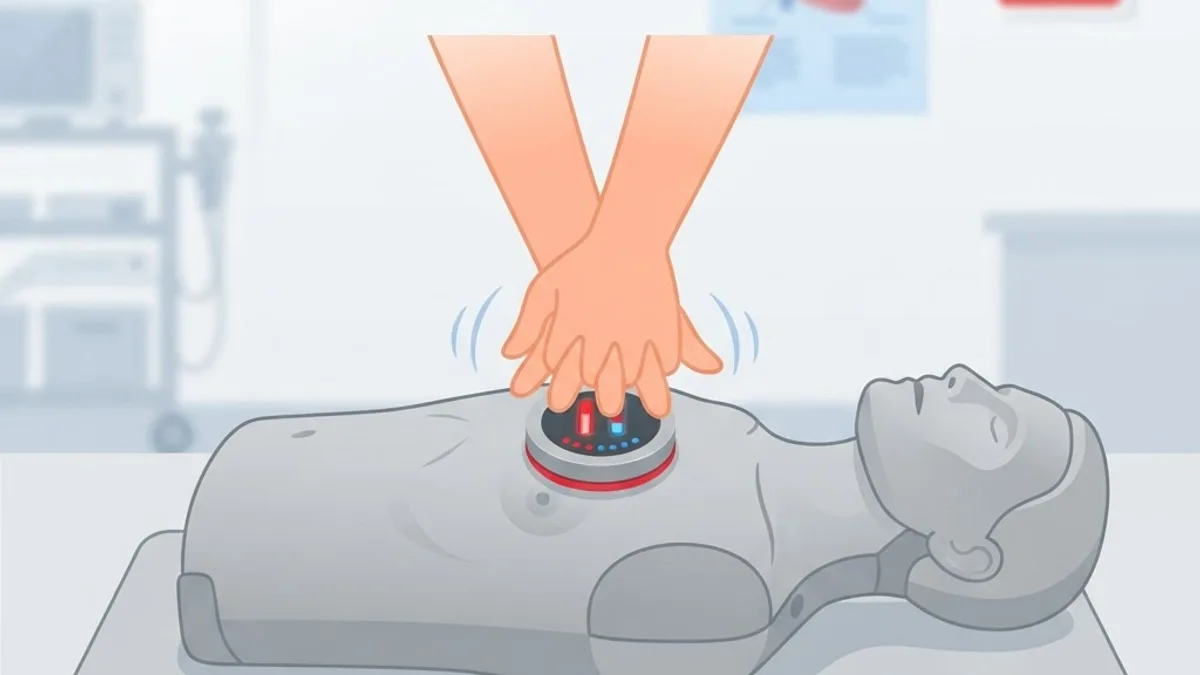
A chest compression feedback device is important because it measures CPR depth and rate in real time, correcting rescuer errors and improving survival odds.
Introduction
A chest compression feedback device is important because it turns guesswork into measurable, correctable action during one of the most stressful moments in medicine: cardiac arrest. When someone's heart stops, the quality of chest compressions is the single biggest factor a rescuer controls, and even trained professionals drift from ideal depth and rate within a minute or two. A feedback device measures what the rescuer is doing in real time and tells them how to fix it, immediately.
This article explains exactly why these devices matter, what problem they solve, what the evidence shows, and how they fit into modern resuscitation guidelines. Whether you are a healthcare provider, a workplace first-aid responder, or a training coordinator, understanding the "because" behind the device helps you use it well.
Table of Contents
- What a Chest Compression Feedback Device Does
- A Chest Compression Feedback Device Is Important Because...
- The Human Problem It Solves
- What the Evidence Shows
- How It Supports High-Quality CPR
- Where These Devices Are Used
- Limitations to Keep in Mind
- Frequently Asked Questions
- Conclusion
What a Chest Compression Feedback Device Does
A chest compression feedback device is a sensor-based tool — either a standalone puck placed on the chest, a pad built into a defibrillator, or a feature in a training manikin — that measures the mechanics of CPR as they happen. It typically tracks compression depth, rate, recoil (whether the chest fully re-expands between pushes), and sometimes hands-off time. It then delivers real-time prompts, such as "push harder," "push faster," or a metronome tone, so the rescuer can adjust on the spot.
A Chest Compression Feedback Device Is Important Because...
Here is the core answer in one place. A chest compression feedback device is important because it:
- Corrects errors in real time. Rescuers cannot reliably feel whether they are compressing to the recommended depth of about 2 to 2.4 inches (5–6 cm). The device measures it objectively and prompts corrections instantly.
- Maintains the right rate. The target is 100–120 compressions per minute. Without a guide, people push too fast under adrenaline or too slow as they tire. A metronome cue keeps the rhythm.
- Ensures full chest recoil. Leaning on the chest between compressions prevents the heart from refilling with blood. The device flags incomplete recoil that rescuers often miss.
- Counteracts fatigue. Compression quality degrades noticeably after one to two minutes. Feedback keeps quality high and signals when to swap rescuers.
- Improves consistency across skill levels. It narrows the gap between an expert and an occasional responder by giving everyone the same objective target.
- Supports better outcomes. Higher-quality compressions maintain blood flow to the brain and heart, which is directly linked to better survival and neurological recovery.
The Human Problem It Solves
The reason feedback devices exist is simple: humans are poor at self-assessing CPR quality. Studies of both laypeople and clinicians repeatedly show that rescuers overestimate their depth and misjudge their rate. Several factors work against them:
- Adrenaline speeds up movements, pushing compression rate too high.
- Fatigue sets in fast; muscle exhaustion reduces depth within minutes.
- Surface softness (a mattress, for example) makes compressions feel deeper than they are.
- Stress and tunnel vision make it hard to count or keep time.
A feedback device removes the need to guess. Instead of hoping the compressions are good enough, the rescuer gets a live scoreboard.
What the Evidence Shows
Resuscitation research and international guidelines from bodies like the American Heart Association (AHA) and the European Resuscitation Council have consistently supported real-time feedback as a way to improve CPR quality. The evidence generally points to a few conclusions:
- Feedback devices reliably improve compression depth, rate, and recoil during both training and real events.
- They are especially valuable in training, where they accelerate skill acquisition and retention.
- Guidelines recommend using audiovisual feedback devices as part of a broader quality-improvement system, alongside coaching, debriefing, and monitoring — not as a standalone fix.
The nuance worth knowing: devices improve the process of CPR very clearly. Improvements in process, combined with strong systems of care, are what ultimately support better survival.
How It Supports High-Quality CPR
High-quality CPR is defined by measurable targets, and a feedback device maps directly onto each one:
Depth
Too shallow and you fail to circulate blood; too deep and you risk injury. The device keeps compressions inside the recommended 5–6 cm window.
Rate
The 100–120 per minute band is a sweet spot. Below it, circulation drops; above it, the heart has less time to refill. A metronome cue locks in the rhythm.
Recoil
Full recoil lets the heart refill. Feedback catches the common habit of leaning on the chest.
Minimising interruptions
Some systems also track "hands-off" time, reminding teams to keep pauses short during rhythm checks or defibrillation.
Because the target reads out live, the rescuer is coached toward all four elements at once — something that is nearly impossible to self-monitor under pressure.
Where These Devices Are Used
- Hospitals and ambulances, often integrated into monitor-defibrillators used by clinical teams.
- Public and workplace AEDs, where some models coach untrained bystanders through compressions.
- Training programs, where manikins with feedback screens let students and instructors see performance instantly and improve faster.
- Schools, gyms, airports, and offices that maintain emergency-response readiness.
Organisations building safety-training content or e-learning around CPR often pair these devices with clear digital resources; well-produced instructional material and content writing can make the difference between a course people forget and one they retain.
Limitations to Keep in Mind
A feedback device is a powerful aid, not a replacement for training or judgment. Keep these caveats in mind:
- Surface calibration matters. Compressions on a soft mattress can read as deeper than they truly are unless the device accounts for it.
- It supplements, not replaces, skill. Rescuers still need proper hand placement, teamwork, and decision-making.
- Device feedback is only as good as its use. If prompts are ignored or the device is placed incorrectly, the benefit disappears.
- It is one part of a system. Survival depends on the whole chain of survival: early recognition, early CPR, early defibrillation, and advanced care.
The Human Problem the Device Solves
To appreciate why these devices matter, it helps to understand the very human limitation they address. Research on CPR performance consistently shows that even experienced, well-trained rescuers cannot accurately judge their own compression depth and rate without objective feedback. Under the adrenaline and stress of a real cardiac arrest, people systematically compress too shallowly and often too fast.
There are several reasons for this gap between perceived and actual performance:
- Fatigue sets in quickly. Compression depth begins to decline within the first minute or two, long before rescuers feel tired. Without a device telling them, they assume they are still pushing hard enough.
- Stress distorts perception. In a crisis, time feels compressed and effort feels greater than it is, so rescuers believe they are doing more than the mechanics show.
- Surfaces mislead. Compressing on a bed or couch feels effective but wastes force into the mattress, and only a calibrated device reveals the shortfall.
- No natural reference exists. Unlike lifting a known weight, chest compressions offer no built-in gauge of whether you have reached the target depth.
A feedback device removes the guesswork. It replaces a rescuer's unreliable internal sense with an objective, external measurement, and that single change is what makes it so valuable.
Real-World Impact on Survival
The importance of these devices is not theoretical. When compression quality improves, physiological markers of blood flow improve with it, and those markers are tied to survival and neurological recovery. High-quality CPR — adequate depth, correct rate, full recoil, and minimal interruptions — is one of the strongest predictors of whether a person survives cardiac arrest with their brain function intact.
By keeping every one of those variables in the target range for the entire duration of the resuscitation, a feedback device helps sustain the blood flow that keeps the brain and heart viable until a shock or advanced care can restore a normal rhythm. That is ultimately why it is considered important: it protects the quality of the one intervention that most directly determines whether someone lives.
Frequently Asked Questions
Why is a chest compression feedback device important?
Because it measures CPR depth, rate, and recoil in real time and prompts the rescuer to correct errors immediately — improving compression quality that rescuers cannot reliably judge on their own.
What does a chest compression feedback device measure?
Typically compression depth, compression rate, chest recoil, and sometimes the length of pauses between compressions.
What is the correct compression depth and rate?
Guidelines recommend a depth of about 2 to 2.4 inches (5–6 cm) for adults and a rate of 100 to 120 compressions per minute.
Do feedback devices improve survival?
They reliably improve the quality of compressions, and higher-quality CPR combined with a strong system of care is associated with better survival and recovery.
Can untrained bystanders use them?
Yes. Many public AEDs include voice prompts and feedback that coach bystanders through compressions step by step.
Do these devices replace CPR training?
No. They enhance performance but do not replace hands-on training, proper technique, and teamwork.
Why does compression quality drop without feedback?
Adrenaline, fatigue, stress, and soft surfaces cause rescuers to compress too fast, too slow, or too shallow — often without realising it.
Conclusion
A chest compression feedback device is important because it makes the invisible visible. It measures the depth, rate, and recoil that determine whether CPR actually moves blood, and it corrects rescuer errors in the moment rather than after the fact. By counteracting fatigue, adrenaline, and human misjudgment, it raises the quality and consistency of compressions across every skill level — and high-quality compressions are what give a person in cardiac arrest their best chance.
If your organisation is developing CPR training programs, safety documentation, or e-learning experiences, Faidaa can help you build clear, engaging, and effective educational resources. Contact us to create training content that helps your team respond with confidence when it matters most.