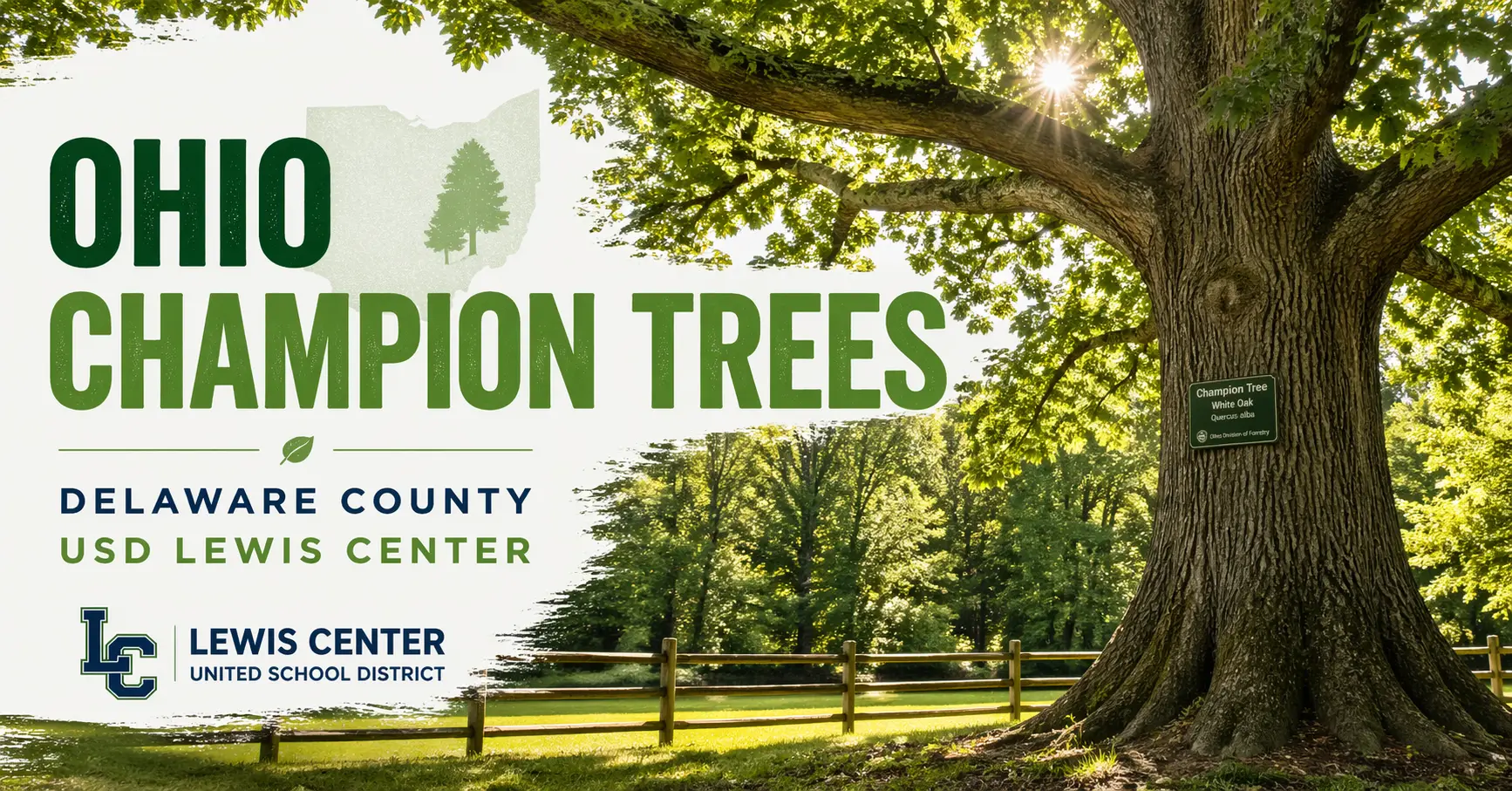
Discover Ohio champion trees Delaware County USD Lewis Center: notable species, locations, conservation tips, and why these giant trees matter to Ohio.
Ohio Champion Trees Delaware County USD Lewis Center: A Guide to the Giants Among Us
The Ohio champion trees Delaware County USD Lewis Center region is home to some of the most impressive natural landmarks in central Ohio. From towering oaks to sprawling sycamores, champion trees are living record-holders — the largest known specimens of their species in the state. For residents, students, and nature lovers around Lewis Center and the Olentangy Local School District (often associated with the "USD" reference), these giants offer a unique mix of history, science, and community pride.
In this guide, we'll explore what champion trees are, why Delaware County holds so many, where to find them near Lewis Center, and how you can help protect them for future generations.
Table of Contents
- What Are Champion Trees?
- The Ohio Champion Tree Program
- Delaware County and Lewis Center Overview
- Why This Area Supports Big Trees
- Notable Champion Tree Species in Ohio
- How Trees Are Measured and Scored
- Where to Find Champion Trees Near Lewis Center
- Tips for Identifying Potential Champion Trees
- Conservation and Community Involvement
- FAQs
- Conclusion
What Are Champion Trees? {#what-are-champion-trees}
A champion tree is the largest documented specimen of a particular tree species in a given region — often a state. They represent the best examples of their kind and are celebrated for their size, age, and ecological importance.
Why Champion Trees Matter
- They store massive amounts of carbon.
- They offer critical habitat for wildlife.
- They connect communities to local history.
- They educate future generations about nature.
- They anchor biodiversity in their ecosystems.
The Ohio Champion Tree Program {#ohio-champion-tree-program}
Ohio maintains a statewide Champion Tree registry through the Ohio Department of Natural Resources (ODNR). The program:
- Documents the largest trees of each species in Ohio
- Accepts nominations from the public
- Inspects nominated trees for measurements
- Maintains an official list of state champions
Who Can Nominate a Tree?
Anyone. Landowners, students, hikers, and nature lovers can submit nominations with photos and basic measurements.
Delaware County and Lewis Center Overview {#delaware-lewis}
Delaware County sits just north of Columbus and is one of Ohio's fastest-growing counties. Lewis Center is an unincorporated community within Delaware County, known for:
- Rapid residential growth
- Strong school systems (often associated with Olentangy Local Schools)
- Parks and preserves
- Proximity to the Olentangy and Scioto river systems
Why USD in the Title?
"USD" is sometimes used as a shorthand for Unified School District — in this context it often appears in references related to Olentangy Local Schools and the Lewis Center region.
Why This Area Supports Big Trees {#why-big-trees}
Delaware County's geography and ecology are ideal for large trees.
Rich Soils
Areas along the Olentangy and Scioto rivers feature deep, fertile soils that encourage deep root systems and massive growth.
Long Growing Season
Central Ohio's climate offers ample rainfall and warm summers, allowing trees to put on substantial annual growth.
Historic Woodlands
Some woodlots were left undisturbed for generations, allowing trees to reach champion size.
Parks and Preserves
Protected lands in Delaware County shield old trees from development pressure.
Notable Champion Tree Species in Ohio {#notable-species}
The Ohio champion tree list includes a wide variety of species. Near Delaware County and Lewis Center, you may encounter:
- Bur oak (Quercus macrocarpa)
- White oak (Quercus alba)
- Eastern sycamore (Platanus occidentalis)
- American beech (Fagus grandifolia)
- Shagbark hickory (Carya ovata)
- Tulip tree (Liriodendron tulipifera)
- Black walnut (Juglans nigra)
Why These Species Thrive
- They're native to central Ohio's mixed mesophytic forests.
- They tolerate Ohio's climate cycles.
- They have long natural lifespans.
How Trees Are Measured and Scored {#measuring}
The Ohio Champion Tree Program uses a scoring system based on three measurements.
The Formula
Total score = Circumference (inches) + Height (feet) + ¼ × Average crown spread (feet)
What to Measure
- Trunk circumference at 4.5 feet above the ground.
- Total height from the ground to the top.
- Crown spread — the average of two perpendicular canopy widths.
Tools You Might Use
- Measuring tape for circumference
- Clinometer or smartphone app for height
- Simple measuring wheel for crown spread
Where to Find Champion Trees Near Lewis Center {#where-to-find}
While exact champion tree locations are sometimes kept private to protect landowners, here are regions near Lewis Center where impressive trees are commonly found.
Key Areas to Explore
- Highbanks Metro Park – Large sycamores along ravines.
- Alum Creek State Park – Mature oaks and hickories.
- Olentangy River corridor – Floodplain giants.
- Delaware State Park – Forested trails with old-growth patches.
- Local woodlots and private preserves – Hidden gems, with landowner permission.
Tips for Visits
- Stay on marked trails.
- Respect private property.
- Never carve or damage tree bark.
- Take photos instead of souvenirs.
Tips for Identifying Potential Champion Trees {#identifying}
Anyone can become a citizen-scientist champion tree hunter.
Signs of a Potential Champion
- A trunk wider than two people can reach around
- Canopy towering above surrounding trees
- Mature bark patterns unique to older trees
- Visible cavities, buttresses, or root flares indicating age
Steps to Take
- Photograph the tree from multiple angles.
- Measure circumference at 4.5 feet.
- Estimate height using available tools.
- Record GPS coordinates if possible.
- Submit the nomination to the Ohio Champion Tree Program.
Conservation and Community Involvement {#conservation}
Protecting champion trees requires community effort.
Threats to Big Trees
- Urban development
- Invasive pests (e.g., emerald ash borer, spotted lanternfly)
- Climate-driven storms
- Soil compaction near construction
- Pollution and drought
How You Can Help
- Plant native species in your yard
- Volunteer with local parks and preserves
- Support tree-protection ordinances
- Educate neighbors and students about tree care
- Report sick or damaged trees to local authorities
Educational Opportunities
Schools in Lewis Center, including those in the Olentangy area, often integrate tree science into outdoor education programs — offering students hands-on experience with local ecology.
FAQs
1. What qualifies a tree as a champion in Ohio?
It must be the largest documented specimen of its species in the state, measured using Ohio's standard formula.
2. Can I nominate a tree I find near Lewis Center?
Yes. Anyone can nominate a tree through the Ohio Department of Natural Resources.
3. Are champion tree locations public?
Sometimes locations are shared, but private-property trees are often kept confidential to protect them.
4. What's the biggest threat to champion trees in Delaware County?
Urban development and invasive pests are among the most significant threats.
5. How old can these trees be?
Some champion oaks and sycamores can be 200–400 years old, depending on species.
Conclusion
The Ohio champion trees Delaware County USD Lewis Center region represents a remarkable intersection of nature, history, and community. These towering trees have witnessed generations of change and continue to provide ecological, educational, and cultural value. By learning how to identify, measure, and protect these giants, residents and visitors alike can help ensure that central Ohio's natural heritage thrives for centuries to come.