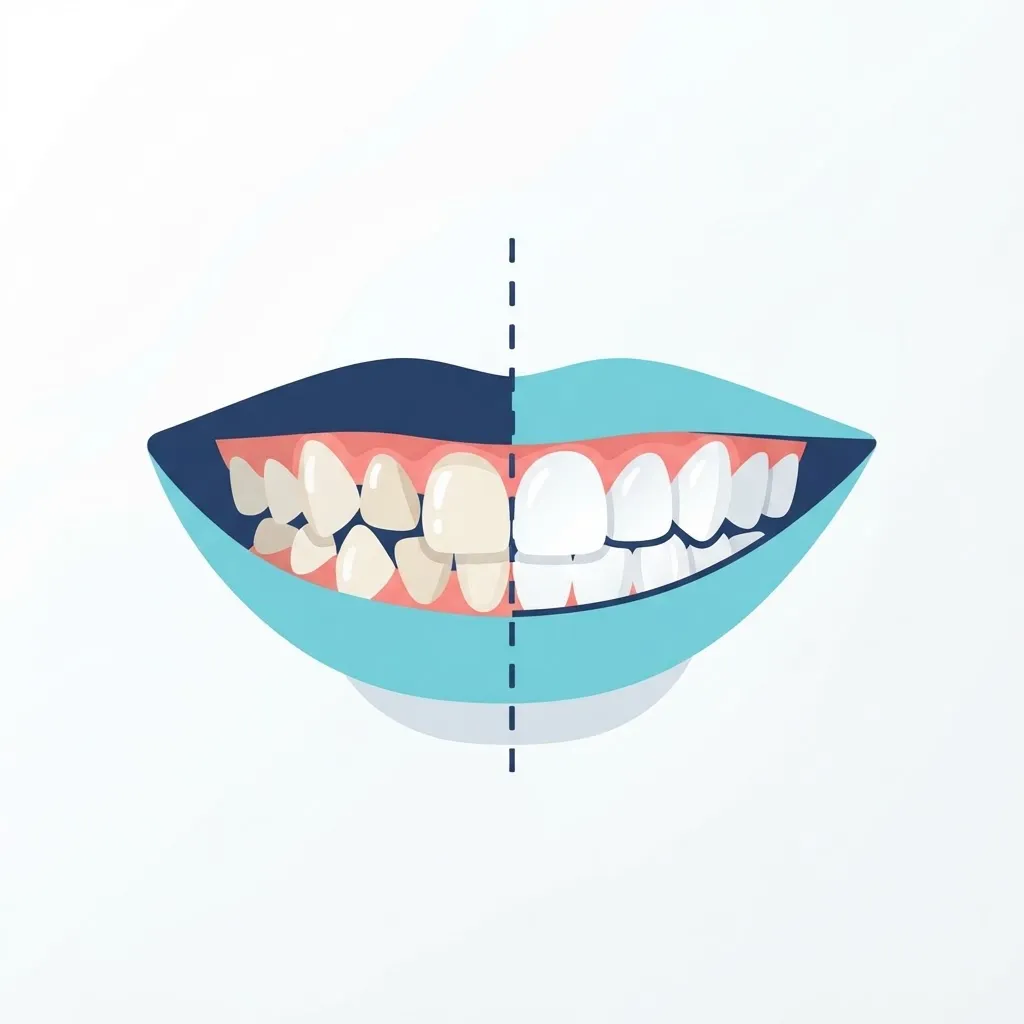
Veneers can mask mild misalignment, but severely crooked teeth usually need orthodontics first. Learn the limits, risks, and the ortho-then-veneer path.
Last updated: July 23, 2026
Introduction
Veneers are often marketed as the shortcut to a perfect smile: thin porcelain shells that transform stained, chipped, or slightly uneven teeth in just a couple of appointments. It is natural, then, to wonder how far that transformation can go. Can veneers cover severely crooked teeth, or is there a limit to what they can fix?
The honest answer is nuanced: veneers can disguise mild to moderate misalignment beautifully, but severely crooked teeth usually need orthodontic treatment first, or instead. Attempting to mask significant crowding or rotation with veneers alone often requires grinding away alarming amounts of healthy tooth, and it can create bite problems that haunt patients for years. This guide explains exactly where the line falls, what dentists consider before saying yes or no, and what the smartest treatment paths look like for genuinely crooked smiles.
Table of Contents
- What veneers are and how they work
- What counts as "severely" crooked?
- When veneers can fix crooked teeth
- Why severe misalignment is a problem for veneers
- The hidden cost: how much tooth must be removed
- Orthodontics first: the approach most dentists recommend
- Combining braces or aligners with veneers
- Veneers vs. other options for crooked teeth
- Questions to ask at your consultation
- Frequently asked questions
- Conclusion
What Veneers Are and How They Work
A veneer is a thin shell, usually porcelain, sometimes composite resin, bonded to the front surface of a tooth. Porcelain veneers typically range from 0.3 to 0.7 millimeters thick and are custom-crafted to the desired shape, size, and shade.
To place a veneer, the dentist usually removes a thin layer of enamel from the front of the tooth so the shell sits flush rather than looking bulky. The veneer is then bonded permanently with dental cement. The result can be strikingly natural: veneers alter the color, shape, length, and apparent alignment of teeth, which is why they are often described as "instant orthodontics."
That phrase, however, is where expectations start to outrun reality.
What Counts as "Severely" Crooked?
Dentists assess misalignment on a spectrum, and the veneer question depends entirely on where you fall on it.
Mild misalignment includes small rotations, slightly uneven edges, minor gaps, and one or two teeth marginally out of line. Moderate misalignment involves noticeable rotation or overlap of a few teeth, but with the overall arch and bite reasonably intact. Severe misalignment means significant crowding, teeth rotated 45 degrees or more, teeth erupting well outside the arch line, deep overlaps, or crossbites and other bite discrepancies involving how the upper and lower jaws meet.
Veneers live comfortably at the mild end, can sometimes work at the moderate level in carefully selected cases, and become genuinely problematic at the severe end.
When Veneers Can Fix Crooked Teeth
For the right candidate, veneers really do deliver a straighter-looking smile without braces. Good scenarios include:
- Slightly rotated front teeth where reshaping the enamel and placing a veneer creates the illusion of perfect alignment
- Uneven tooth lengths or edges that make a smile look crooked even when alignment is decent
- Small gaps and minor spacing irregularities, which veneers close elegantly
- A single out-of-step tooth in an otherwise well-aligned arch, where one or two veneers can restore harmony
- Combined issues, such as mild misalignment plus deep staining or worn enamel, where orthodontics alone would not address the color and shape problems anyway
In these cases, veneers offer a genuine advantage: results in weeks rather than the 12 to 24 months aligners or braces require, while simultaneously perfecting color and shape.
Why Severe Misalignment Is a Problem for Veneers
When teeth are significantly crooked, the "instant orthodontics" model breaks down for several interlocking reasons.
Geometry works against you
A veneer sits on the front of the tooth. If a tooth is rotated sharply or positioned well behind its neighbors, no shell on its surface can move it into the arch. To create the illusion of alignment, the dentist must aggressively grind down protruding areas and build out recessed ones, and severe cases demand more grinding than responsible dentistry allows.
The bite is non-negotiable
Severely crooked teeth usually come with bite problems. Veneers change the shape of biting surfaces and edges; place them over a bad bite and you can concentrate destructive forces on the porcelain, leading to chips, fractures, and debonding. A misaligned bite also stresses the jaw joint, and masking it cosmetically does nothing to address that underlying dysfunction.
Cleaning and gum health suffer
Veneering overlapping, crowded teeth creates ledges and tight contours that trap plaque. Over the years, that means elevated risk of decay at veneer margins and chronic gum inflammation, which are precisely the problems that shorten a veneer's lifespan.
The Hidden Cost: How Much Tooth Must Be Removed
This is the point every patient considering veneers for crooked teeth must understand. Enamel does not regenerate. A conservative veneer preparation removes about half a millimeter from the front of the tooth. But when a tooth juts forward and must be visually "pulled back" behind a veneer, dentists may need to remove one to two millimeters or more, sometimes cutting through the enamel entirely into the dentin.
Preparations that deep have consequences: significantly higher rates of post-treatment sensitivity, greater risk of the tooth eventually needing root canal treatment, and weaker bonding, since veneers adhere far better to enamel than to dentin. In the worst cases, teeth prepared this aggressively end up needing full crowns, and the patient has traded healthy natural teeth for a lifetime of restorative maintenance. Ethical cosmetic dentists refuse to do this, and their refusal is protecting you.
Orthodontics First: The Approach Most Dentists Recommend
For severely crooked teeth, the consensus recommendation is straightforward: move the teeth first, then enhance them if desired.
Modern orthodontics offers more comfortable and discreet options than ever. Clear aligner systems handle a wide range of crowding and rotation cases nearly invisibly. Traditional braces remain the gold standard for complex movements and bite correction. Treatment typically takes 12 to 24 months for significant cases, and the payoff is enormous: your natural, healthy tooth structure ends up in the right place, permanently, with no grinding required.
Once alignment is corrected, many patients discover they no longer want veneers at all. Straight natural teeth, perhaps brightened with professional whitening, often deliver the smile they were seeking. Others proceed to veneers afterward for color and shape refinement, and those veneers can now be ultra-thin and minimally invasive because the teeth are already in position.
Combining Braces or Aligners with Veneers
The orthodontics-then-veneers sequence is one of the most powerful combinations in cosmetic dentistry, and it is worth understanding how well it works.
After alignment, veneer preparations can be conservative, often 0.3 to 0.5 millimeters, staying entirely within enamel. Bonding is stronger, sensitivity risk is minimal, and the veneers last longer because bite forces are distributed properly across well-positioned teeth. The final aesthetic result is also better: the dentist is refining an already-harmonious arch rather than performing structural camouflage.
The trade-off is time and cost. You are paying for two treatments and waiting a year or more. But compared with the long-term costs of failed aggressive veneers, replacement porcelain, root canals, and compromised teeth, the staged approach is usually cheaper over a lifetime, not more expensive.
Veneers vs. Other Options for Crooked Teeth
Here is how the main paths compare for misaligned smiles:
- Clear aligners: Best for mild to severe crowding without major bite surgery needs. Preserves all tooth structure. Takes months to two years.
- Braces: Handles the most complex cases, including significant bite correction. Most visible option, though ceramic and lingual versions reduce that.
- Veneers alone: Excellent for mild misalignment combined with color or shape concerns. Inappropriate for severe cases.
- Composite bonding: A cheaper, reversible cousin of veneers for very minor irregularities; not a solution for real crowding.
- Orthodontics plus veneers: The premium path for severely crooked teeth when the patient also wants a transformed color and shape.
A thorough consultation with X-rays, photographs, and bite analysis is the only way to know which category your smile falls into.
Questions to Ask at Your Consultation
Bring these to any dentist proposing veneers for crooked teeth:
- How much enamel will you need to remove from each tooth, in millimeters?
- Will any preparations extend into dentin?
- Would orthodontic treatment first reduce how much tooth structure is removed?
- How will my bite be affected, and how are you evaluating it?
- Can I see cases you have treated with similar misalignment?
- What is the expected lifespan of these veneers, and what happens when they need replacement?
A trustworthy dentist welcomes these questions. Evasive answers, or promises that severe crowding can be fixed in two visits with no downsides, are red flags worth heeding.
Frequently Asked Questions
Can veneers straighten really crooked teeth?
Veneers do not move teeth at all; they create a visual illusion of straightness. For mild to moderate misalignment, that illusion can be excellent. For severely crooked teeth, achieving it requires removing unsafe amounts of healthy tooth structure, so orthodontic treatment is the appropriate solution.
How crooked is too crooked for veneers?
As a general guide: teeth rotated more than about 20 degrees, significant overlapping or crowding, teeth positioned well outside the arch line, or any meaningful bite discrepancy usually place a case beyond what veneers can responsibly address. A dentist confirms this with models, photos, and bite analysis.
Do I need braces before getting veneers?
If your misalignment is severe, almost certainly yes, and it works in your favor. Aligning teeth first means veneer preparations can be minimal, bonding is stronger, and the final result looks better and lasts longer. Many patients find they do not even want veneers after orthodontics.
Are veneers painful on crooked teeth?
Conservative veneer treatment involves little discomfort. However, the aggressive preparations required to mask severe crookedness frequently cause lasting sensitivity, and deeply prepared teeth carry an elevated risk of needing root canal treatment later. This is a key reason dentists discourage veneering severe cases.
How long do veneers last on misaligned teeth?
On well-aligned teeth with a healthy bite, porcelain veneers commonly last 10 to 15 years or more. On poorly aligned teeth with uncorrected bite issues, lifespan drops significantly due to chipping, fracture, and debonding under uneven forces.
Are clear aligners better than veneers for crooked teeth?
They solve different problems. Aligners physically correct tooth position while preserving all natural structure, making them better for genuine misalignment. Veneers excel at fixing color, shape, and minor positional illusions. Severely crooked smiles need alignment first; veneers are an optional refinement afterward.
What is the cheapest way to fix severely crooked teeth?
Clear aligners or braces are usually the most cost-effective genuine fix, typically costing less than a full set of quality porcelain veneers while permanently correcting the underlying problem rather than covering it.
Conclusion
Can veneers cover severely crooked teeth? Technically a dentist can put porcelain on almost anything, but responsible cosmetic dentistry says no. Veneers shine when misalignment is mild, delivering a straighter, brighter smile in weeks. When crookedness is severe, masking it with porcelain demands destructive tooth reduction and invites bite problems, sensitivity, and early failure.
The smarter path is orthodontics first, with minimal-prep veneers afterward if you still want them. It takes longer, but it protects your natural teeth and produces results that genuinely last. Insist on a consultation that includes bite analysis, ask hard questions about enamel removal, and be wary of anyone promising instant fixes for significant crowding.
Clear, honest patient education like this is what modern healthcare audiences expect to find online. Dental practices that invest in professional healthcare-focused digital marketing and a fast, well-structured website design are the ones patients discover and trust when they search for answers.