Hydraulic Alligator Shear: How the Cylinder, Pump and Blade Work Together
How the cylinder, pump and blade of a hydraulic alligator shear work together — force, cutting pace and blade care for 200- and 250-ton models.
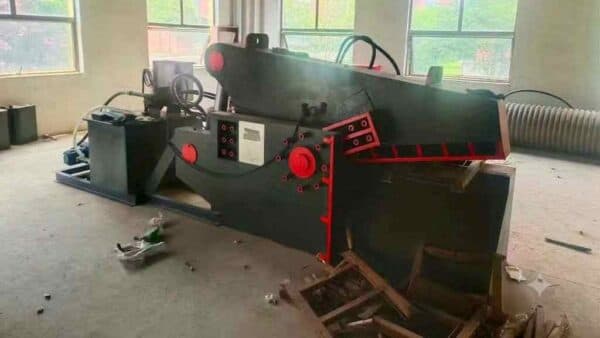
A hydraulic alligator shear looks simple from the outside. One pedal, one jaw, one bite. Inside, three parts do the work: a cylinder that makes the force, a pump that moves the oil, and a blade that makes the cut. When the three agree, the machine cuts all day. When one of them falls behind, the whole machine feels it.
The cylinder: where the force comes from
The cylinder is the muscle. Oil pushes the piston, the piston pushes the moving blade, and the jaw closes with 200 or 250 tons of force behind it. That force is what lets a small machine bite through Ø45 mm round bar on the 200-ton model and Ø55 mm on the 250-ton model. A bigger cylinder means a bigger bite, and it also means more oil has to move on every stroke. Nothing else in this hydraulic alligator shear decides the cutting limit. The cylinder does.
The pump and the motor: what sets the pace
A 22 kW motor drives the pump of this hydraulic alligator shear on both sizes. The pump pushes oil to the cylinder, the cylinder closes the jaw, and the jaw opens again for the next piece.
That round trip is the cutting cycle, and it runs 8 to 10 times a minute on the 200-ton model and 6 to 10 times a minute on the 250-ton model. The 250-ton machine is slower because its bigger cylinder moves more oil on every stroke, so the same pump takes a little longer to fill it.
A yard that feeds the jaw without stopping will see the difference in tons per shift. At 200 tons, the machine moves 1.5 to 3.0 tons an hour. That is the pace of the hydraulic alligator shear, and it is set by the pump, not by the operator.
The blade: where the cut happens
The blade is the only part of this hydraulic alligator shear that touches the scrap. On the 200-ton model it is 800 or 1000 mm long, hardened to 48–56 HRC, and it cuts 40x40 mm square billet and plate up to 20 mm thick. On the 250-ton model the blade is 1000 or 1200 mm long and cuts 50x50 mm billet and plate up to 25 mm.
A sharp edge on the hydraulic alligator shear cuts clean and fast. A dull edge drags, bends the piece, and wears the cylinder out faster, because the machine has to push harder for the same cut. The blade unbolts, so a dull edge is a swap, not a rebuild, and spare blades ship within five working days.
When the parts of the hydraulic alligator shear fall out of step
A machine that slows down is usually telling the owner which part to check. If the cut drags, look at the blade edge first. If the jaw closes slowly, check the oil level and the pump. If the force feels weak on thick bar, the cylinder seals may be worn. None of these is a rebuild. The blade swaps in minutes, the oil tops up, and the seals are a service job.
One hydraulic alligator shear that gets these three checks will cut the same pile year after year, and the spares for all three parts ship within five working days.
FAQ
Does a hydraulic alligator shear need a special power supply? It runs on a 22 kW motor, the same size on both models. A yard with standard industrial power can run it. Check the local supply with the factory before the machine ships.
How often does the blade need changing? It depends on what you cut and how thick it is. Mixed rebar wears an edge faster than clean plate. When the cut starts to drag, swap the blade. A fresh edge goes on in minutes, and spares ship within five working days.
If one hydraulic alligator shear matches the scrap on your floor, send us the thickest bar and plate you cut every day. We reply with a quote within 48 hours. Huaxin has built shears since 1989, and this machine now works in more than 30 countries.
Related Blogs
- Technology
 2 min read
Link peptide
Retatrutide is gaining attention in modern pharmaceutical and metabolic health research because of its unique activity on three important hormone receptors:
Ooliver 7775 - Technology
 2 min read
200 Ton Crocodile Shear: The Same Machine Under a Different Name
A crocodile shear is the same machine as a 200-ton alligator shear. Learn where each name is used and the five checks to run before buying.
LLeon Li8 - Technology
 3 min read
200 Ton Alligator Shear: What It Cuts, and What to Check Before You Buy
What a 200 ton alligator shear cuts, the four numbers to check before you buy, and the questions to ask before you pay.
LLeon Li6